Hi all, and welcome to Meditation Monday! Today, I want to discuss breathing techniques. I rely on these techniques a lot, especially when I’m feeling stressed, anxious, or just trying to fall asleep.
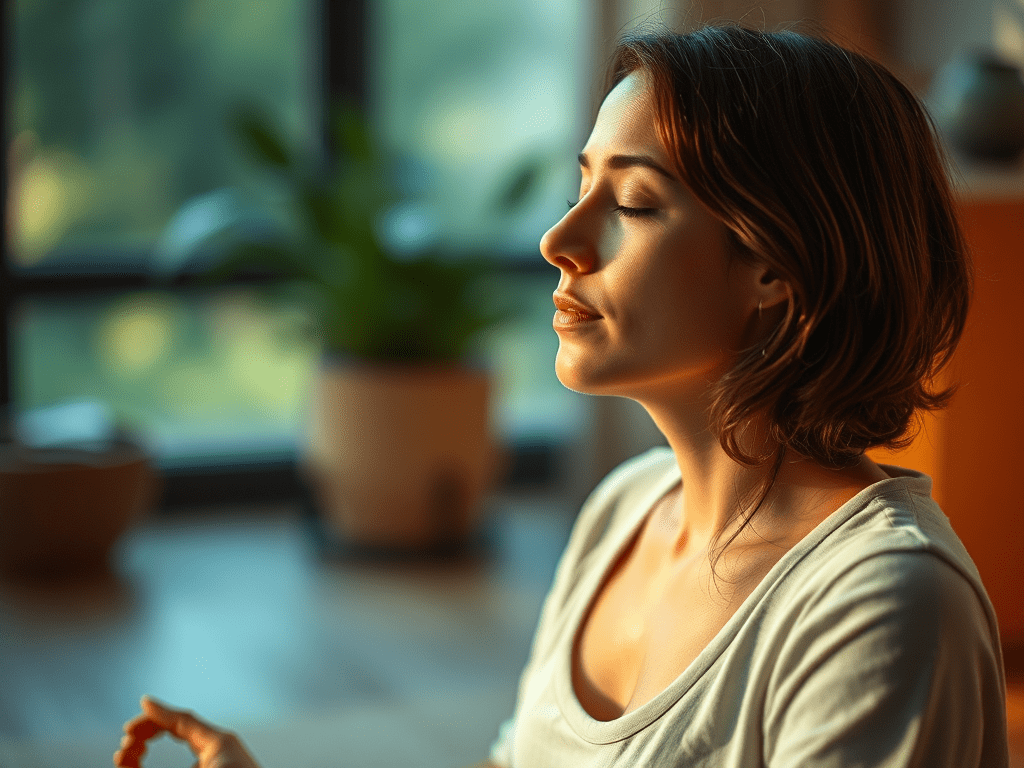
What Do Breathing Techniques Have to Do with Meditation?
Breathing consciously is a big part of meditation. During guided meditations, you’re often prompted to focus on your breath, with cues on when to inhale and exhale. Why? Because breathing is something we do constantly, it can serve as an anchor to bring us back to the present moment. When your mind inevitably drifts, focusing on your breath helps reel your thoughts back toward the present, making conscious breathing a foundational part of meditation.
When people are new to meditation, their minds can wander frequently, making it hard to stay in a meditative state. The key is not to get frustrated when this happens—everyone struggles with distracting thoughts now and then, even seasoned meditators! The goal is to simply notice when your mind has strayed and gently bring it back to your breathing—in and out.
I won’t sugarcoat it—when I first started meditating and focusing on my breath, I found it incredibly frustrating. I’m a natural storyteller, so my mind is always busy weaving narratives. Plus, I’ve struggled with anxiety, often obsessing over trivial mistakes. Initially, it seemed impossible to focus on something as basic as breathing. But here’s the thing: our brains are wired to get distracted, so gently reminding ourselves to refocus is just part of the process—both in meditation and everyday life.
My Journey with Breathing Techniques
In those early days, I felt like a failure whenever I got distracted during meditation. But over time, I learned that gently bringing myself back to my breath was part of the meditation practice. These days, I don’t beat myself up over mental detours; instead, I acknowledge them, let them go, and refocus.
In guided meditations, after a few minutes of focusing on breathing, you may be directed to switch your attention to other things, like imagery or sensations. However, specific breathing exercises are designed to help you use your body’s natural calming mechanisms to physiologically calm down quickly. Below are some techniques I’ve learned—originally as coping strategies for anxiety, but they work just as well as meditation launching points.
Breathing Techniques I Learned
(1) Belly Breathing (Diaphragmatic Breathing)
I first learned about belly breathing in high school when I struggled with shortness of breath during sports. A coach told me I was relying too much on my chest to breathe and that I should focus on using my diaphragm. This method allows for deeper, more efficient breaths.
How to do it:
- Sit or lie down comfortably. (I prefer lying down for this.)
- Place one hand on your chest and the other on your belly, around or slightly above your belly button.
- Inhale through your nose and feel your belly hand rising as your diaphragm works. (The hand over your chest should stay relatively still.)
- Exhale through your nose or mouth. Your belly hand should fall, and your chest hand should still remain motionless.
- Repeat for 5-10 minutes (or longer, if needed).
When to use it: Belly breathing is useful for sports, singing, yoga, band, or any activity that requires controlled breathing. Personally, I’ve found it invaluable when I’m anxious or panicked.
My Alteration: When I’m feeling really anxious or experiencing heart palpitations, I place my left hand over my heart and my right hand on my belly. Focusing on the rise and fall of my belly, along with feeling my heartbeat slow down, helps me calm down.
(2) 4-7-8 Breathing
I learned 4-7-8 breathing from a therapist who was helping me manage panic attacks in my early twenties. This technique is designed to activate the parasympathetic nervous system, which promotes relaxation.
How to do it:
- Inhale through your nose for a count of 4.
- Hold your breath for a count of 7.
- Exhale slowly and completely through your mouth for a count of 8.
- Repeat for 5-10 minutes.
When to use it: This technique is great for calming down after a stressful day or before bed. I also use it during panic attacks.
My Alteration: Occasionally, I’ll add a 2-count breath hold after exhaling, creating a 4-7-8-2 rhythm. I find this extra pause helps me transition more smoothly between breaths.
(3) Box Breathing (Four-Square Breathing)
I learned about box breathing during DBT (Dialectical Behavior Therapy). It’s a popular technique used by Navy SEALs to stay calm under pressure. The idea is to inhale, hold, exhale, and hold again, each for a set count of 4.
How to do it:
- Inhale through your nose for a count of 4.
- Hold for a count of 4.
- Exhale through your mouth for a count of 4.
- Hold again for a count of 4.
- Repeat for 5-10 minutes.
When to use it: This technique is great for staying focused under pressure. While I don’t use it often, I see its value in highly stressful situations.
My Alteration: I tend to extend the count to 5 or 6 , as the 4-count intervals feel too short for me. It’s important to adjust these techniques to suit your body and needs, so when this particular breathing technique would cause my to hyperventilate, my therapist recommended lengthening the count, which works better for me.
(4) Physiological Sighs
I didn’t learn about physiological sighs until my late twenties, but they’ve been a game changer. Dr. Andrew Huberman shared this technique on his podcast, and I found it incredibly helpful for relaxation.
How to do it:
- Inhale completely through your nose.
- At the top of your breath, take a second smaller inhale.
- Exhale slowly through your mouth.
- Repeat for 5-10 minutes.
When to use it: I use physiological sighs when I need to calm down quickly, whether before bed or in the midst of a panic attack. I also find them useful before jumping into other breathing exercises because I can feel the relaxation take effect in only a few rounds of breathing.
My Alteration: Sometimes, I’ll experiment with the size of my second inhale. If it’s just a small inhale after a full one, I find it more relaxing, which is fantastic for bedtime. If both inhales are partial, it keeps me alert while still helping me stay calm, which helps when I’m doing an important task, such as driving.
How is a “Count” Different from a “Second”?
Sometimes, “counting” and “seconds” can be used interchangeably. However, when I told myself to “hold my breath for 4 seconds,” I often panicked that my internal clock was off. Especially when panicking already (where my counting was typically faster), considering “counts” and “seconds” as the same felt like an additional thing to track when trying to get my mind to think of less.
Instead of worrying if my internal clock is correct, I see “counting” and “seconds” as different definitions. “Seconds” keep track with a clock while “counting” can be at my own speed. I felt less pressure for precise counting when I reminded myself that how fast I counted was under my control. But keep in mind that the counting should be at roughly the same interval from each other—if you count more quickly or slowly than a second, you may need to adapt the count number in the above exercises. For instance, since I typically count faster when under pressure, I increase the count to 5 or 6 when I use the box breathing technique.
Final Thoughts
Breathing techniques have become an essential part of my mental health toolkit. Whether I’m meditating, managing anxiety, or just trying to relax, these techniques help me center myself and regain a sense of calm. Remember, there’s no right or wrong way to breathe—find what works best for you and your body, and be patient with yourself as you practice.
Wishing you all a relaxing Monday,
B.R. Quinn

 B.R. Quinn